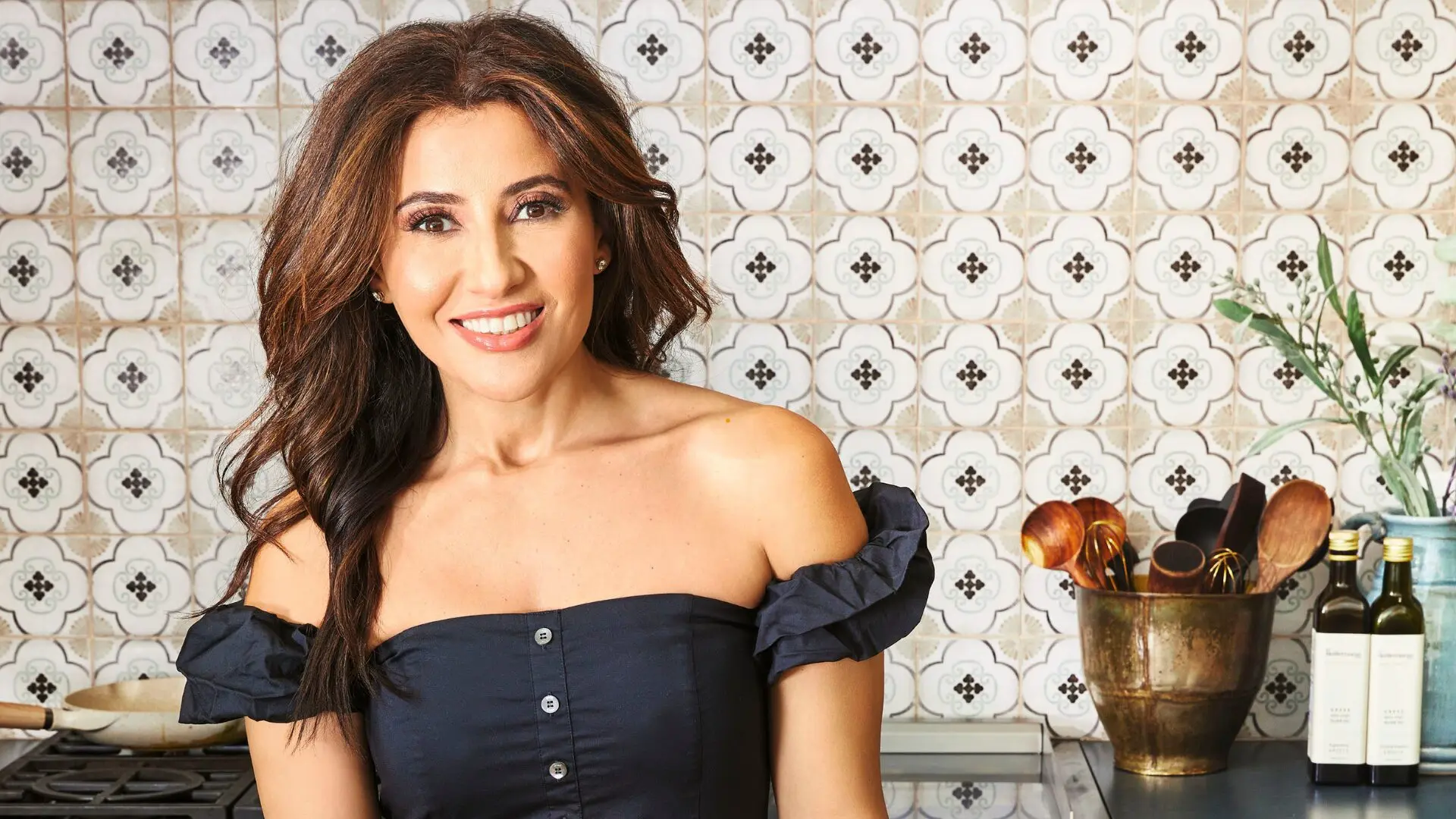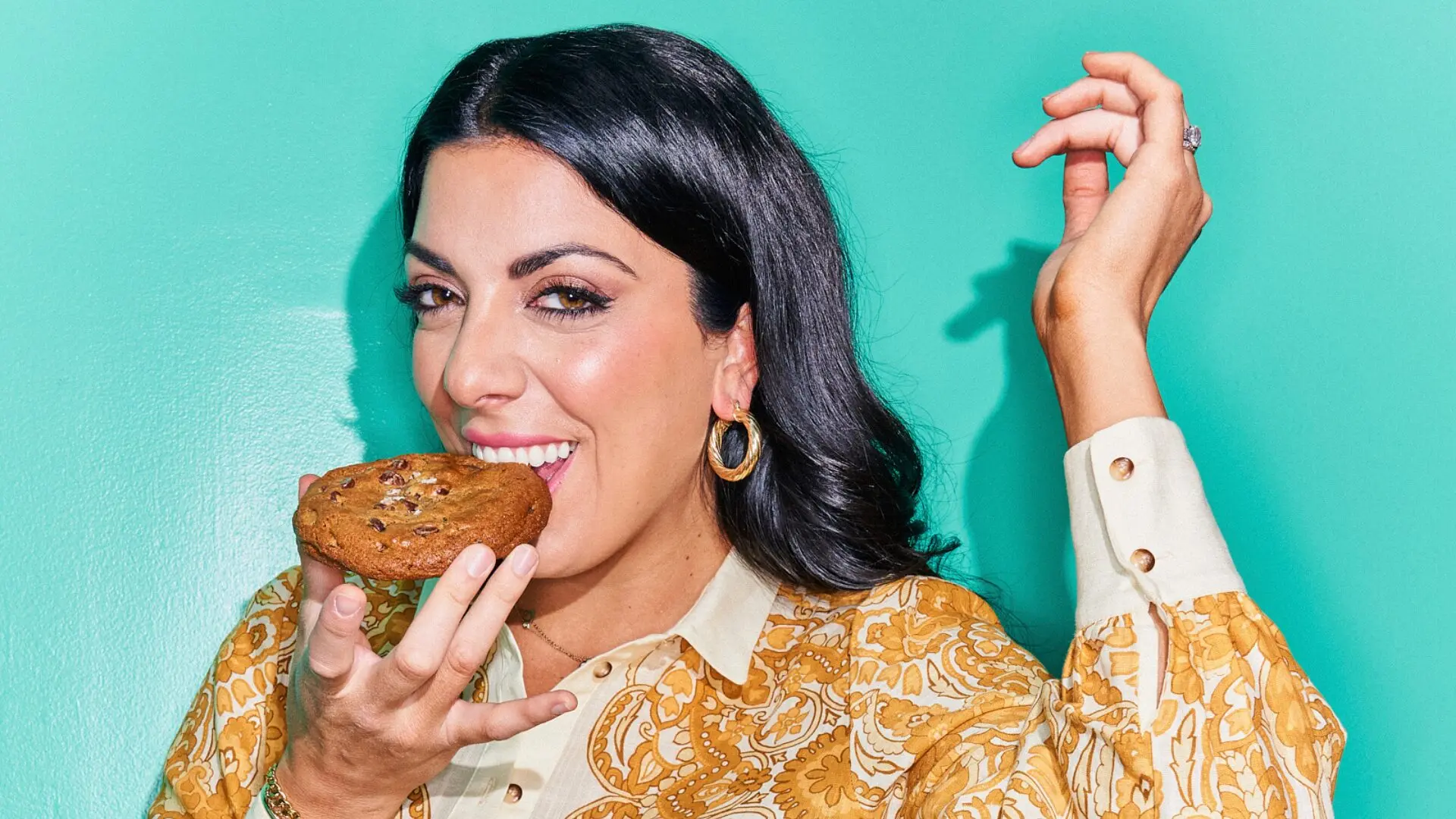

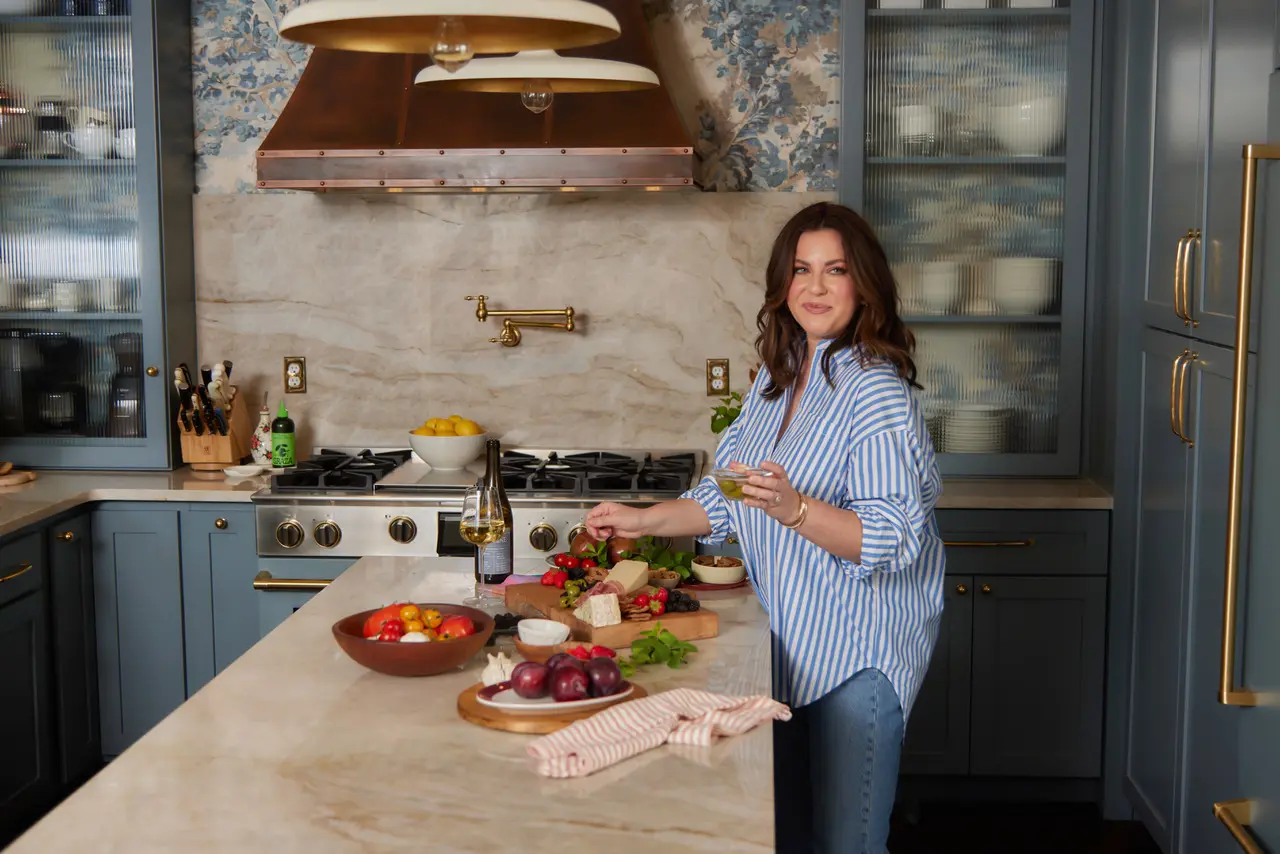
Suzy Karadsheh didn’t set out to build a Mediterranean food empire. In fact, when her husband Saba suggested she start a website to share her recipes, her first thought was “who’s going to read that?” A decade later, The Mediterranean Dish is the leading destination for modern Mediterranean cooking, Suzy is a two-time New York Times bestselling cookbook author, and she’s built an olive oil and spice line sourced directly from century-old family groves in Greece. Born and raised in the coastal Egyptian city of Port Said — where weeknight dinners meant fresh fish from the market seasoned with cumin, coriander, and a generous squeeze of citrus — Suzy now lives in Atlanta with her husband, their two daughters, and a kitchen philosophy that prioritizes the vibe over the presentation. Paper plates welcome.
You started The Mediterranean Dish in 2014 when your daughters were young. What was going on in your life at that point that made you think, “Now’s the time to do this”?
I actually didn’t have that thought at all! It was my husband Saba’s idea. I was transitioning between working full-time in marketing and fundraising and was figuring out my next steps. One day Saba came home and said, “you should be doing something with food,” because it had always been a big part of my upbringing. Being at the table has always been a big deal to me, and I was always inviting people over to try new recipes. He had been listening to some podcast and said, “you should have a website to share your recipes.” I thought to myself, “who’s going to read that?” But ultimately, I decided to do it so there would be a place to document these recipes for my daughters. I definitely didn’t think of it ever becoming the company it is today.
You’ve described growing up in your mom’s kitchen in Port Said — rolling grape leaves, shelling nuts for baklava. When you think about what your mom was actually teaching you in those moments, was it cooking, or was it something else?
I don’t think she was ever concerned about me being a good cook. She never said “make sure you’re putting this much of this in there” – it was about spending time together in the kitchen. Oftentimes when you’re working on grape leaves or things like that, it’s a cultural rite of passage to be able to make them, and it’s also a social activity. Friends of hers, women in the family, we’d all sit around together, cooking, chatting, and I’d be listening to that conversation. You’d be amazed how close you can get to someone by making something together side by side. I think that was her intention… passing along the communal aspect, telling stories, and talking about life.
Your second cookbook is called Simply Dinner and you’ve been open about the fact that the nightly cooking routine can feel like a grind. What does a realistic weeknight look like in your house — not the cookbook version, the Tuesday version?
I’m just like everybody else. Tuesday, Wednesday, Thursday – they’re all a grind. I don’t want to spend more than 30 minutes pulling together a meal. For dinner last night, I pulled out a piece of meat earlier in the day, decided to sizzle it and made some middle eastern beef bowls with tahini, harissa, leftover rice, and a salad – basically the only “cooking” I did was sizzling the beef for 15 minutes. Most of my nights are “how quickly can I put something on the table that feels nourishing and doesn’t feel like a chore?” To be clear though, I’ve never felt like cooking for people is a chore. There are some weekends where I like to cook all day because I find it so fun to feed people. I’m always asking people to come over so I can make a big meal. It can be hard to be in that creative mindset on a weeknight. I like to make sure my fridge has enough things I can pull and make a meal from at a moment’s notice.
You’ve said the Mediterranean way is less about what’s on the plate and more about the energy you bring into the home. How do you actually practice that on the nights when you’re tapped out?
My main focus is the energy around the table, the people, and the general vibe of the night. I don’t put so much emphasis on making a perfect meal. My table is not perfect. Sometimes it’s just paper plates because I’m tapped out, and I’m not going to stand at the sink to wash dishes. But I’ll make sure you get a good meal, even if it’s simple. Maybe if I made hummus the night before, and I have leftover stuff I can put next to it, we’ll make fun bowls where everyone can make their own. Instead of fussing over the table or perfect dishes, I prefer to save my energy to spend time with the people I love.
Feeding kids is one of those areas where moms get a LOT of unsolicited input. What’s a piece of conventional feeding advice you’ve just decided to ignore?
Well, I ignore a lot of things – ha! One of the things I did notice early in motherhood is how often my friends would make separate meals for their kids. For example, when we would be invited to places, they would be making chicken nuggets for their kids because they “wouldn’t enjoy” what the adults were eating. From day one, I decided I’m not making two meals, and our kids will eat what we eat. I think people make too many accommodations for their kids. We also don’t give kids enough credit! I think more kids than we think would probably be open to eating something “strange” or unknown every once in a while.
Your husband has Jordanian roots, you grew up in Egypt, you’re raising your girls in Atlanta. When those food traditions overlap or bump up against each other at the table, what does that look like? Is it more fusion or more negotiation?
It’s so fun that we can do all of it. For example, earlier this week I ended up making what looked like a fajita with a Greek vibe to it. In my mind, gyro, fajita, and shawarma are all the same concept. It’s meat (seasoned differently depending on the culture) and a variety of different toppings. In our house, we view the mix of cultures as a fun thing. Some nights we eat American cuisine, like steak and potato, but maybe the potato will taste more Greek than American, or I’ll make a pasta with an Egyptian vibe as opposed to an Italian American vibe. We love fusion. It’s not a clash; it’s something we fully embrace. My kids are not confused about who they are, I think they just view the world a bit differently. After all, it’s exciting to have more flavors in your life rather than less!
Is there a dish or a kitchen ritual that you can feel your mom’s hands in when you make it? Something that still connects you to Port Said even all these years later?
Whenever I make seafood, I am immediately taken back to Port Said in Egypt, which is where I grew up. We ate a lot of fish, probably 3-4 times a week and always something different. It often depended on what was available at the market that day… sometimes it’s beautiful shrimp with lemon, sometimes fish grilled a certain way. Every time I make seafood it has the same vibe and same flavors from my childhood. Cumin and coriander were spices my mom always used, and now so do I (and of course a lot of citrus!).
What do your daughters cook when they’re cooking for themselves? Are you seeing your influence show up, or are they charting their own path?
They love to eat, but don’t like to put so much energy into cooking. My youngest is more creative, she won’t eat a salad without sumac on it. If it’s not a Mediterranean restaurant, they won’t use sumac at all. I see future her being someone who sneaks her own sumac or olive oil into the restaurant. My oldest is very busy, often eating a salad with protein on top. If I didn’t make the food, she would probably opt for that. She’s not as picky about flavors but she also appreciates them so much.
The Mediterranean Dish has gone from a blog to cookbooks, a product line, culinary tours, a whole team of contributors. What’s been the hardest thing about scaling something that started in your kitchen — and was there a point where growth and motherhood felt like they were in direct competition?
Always – every part of it is hard, to be honest. Right now, we’re in a tough place as we continue to grow and more voices are added to the site. There’s always layers to making sure we’re all on the same page, sharing the same stories. We’re lucky that most of our contributors are from all different parts of the Mediterranean and are excited about sharing and celebrating the warmth and what we have in common as people from that region. I think growth in general is always challenge. There’s always more you can do, and it requires more time to do it all. This means less free time for me to spend with my daughters. Luckily, one of them works for us, which adds another element of excitement to be able to talk business with my oldest. My youngest also shares her opinions regarding my business too, so they’re involved to a degree but it’s still a challenge. I don’t really believe in balance – I believe things ebb and flow, sometimes I’ve had to be really invested in the business and sometimes I’ve stepped back. I’ve just had to learn to not feel guilty about it.

You launched your own olive oil and spice line rather than just pointing people to other brands. That’s a real operational leap. What pushed you to take that on?
Other people! Early on, people would comment and send me emails when I would talk about a certain spice that at the time maybe wasn’t as readily available (like zaatar or Aleppo pepper) and complain about not having access to them. We decided we wanted to be a complete resource for people. We wanted to make it as easy as possible to access the flavors of the Mediterranean. These people were complaining about things not being available in their grocery store, so we said let’s make it available… you’re already cooking our recipes, we want you to have access to the spices you need in the same place. With olive oil, what’s unfortunately on shelves it’s often not the real deal – it’s a mix of inferior olives, or sometimes a portion is olive oil and a portion is something else. I decided we needed to source real deal olive oil and bring it directly to people. So far, it’s been very well received, which demonstrates the real gap in the market that we filled.
Five pantry staples that will make the biggest difference in a home cook’s weeknight dinner — go.
• Extra virgin olive oil
• Some sort of citrus (fresh lemon juice, a hit of balsamic vinegar)
• Garlic
• Onion
• Spices (fresh herbs) – mainly oregano and Aleppo pepper
You’ve got a culinary tour headed to Tuscany and Umbria this summer. Without spoiling too much — what’s one thing about how families eat in that part of Italy that you want to bring home with you?
More than the actual ingredients or food, I want to bring home the vibe. That part of the world is so unspoiled, people there are still spending time at the table. They’re taking time to enjoy the rolling hills, the sunshine, a good bottle of wine, tomatoes just picked off the vine – the sort of simple things that we sometimes miss here.