
For decades, the advice was clear: throw out your wooden cutting boards and buy plastic. Wood is porous, the reasoning went, so it must harbor bacteria in ways that smooth, non-porous plastic never would. Health departments required restaurants to use plastic. The USDA recommended plastic for home kitchens. Everyone knew plastic was safer.
Except it turns out everyone was wrong.
The study that changed everything
In the early 1990s, food microbiologist Dean Cliver at the University of Wisconsin wanted to find out how home cooks could properly sanitize their wooden cutting boards. The USDA was recommending plastic boards for home use, but when Cliver asked them for the scientific evidence behind that recommendation, they admitted they didn’t have any. So he set out to test both materials.
The results were unexpected.
Cliver and his colleagues contaminated both wooden and plastic cutting boards with dangerous bacteria including E. coli, Salmonella, and Listeria. Three minutes after contamination, 99.9% of the bacteria on wooden boards had died. On plastic boards? The bacteria were still thriving. When boards were left overnight at room temperature, wooden boards had no recoverable bacteria. Plastic boards? The bacteria had actually multiplied.
Why wood wins
The science behind wood’s antibacterial properties is straightforward. When you wash a wooden cutting board, the wood absorbs water along with any bacteria on the surface. The bacteria get pulled down into the wood’s structure through capillary action. Once trapped inside, they can’t contaminate your food, and they eventually die as the board dries.
Plastic boards don’t have this superpower. Bacteria sit on the surface, where they’re easy to recover and can multiply if conditions are right. Worse, as plastic boards get used and develop knife scars, those grooves become impossible to clean properly. Even running them through a dishwasher doesn’t always work. The bacteria hide in the scratches, protected from soap and sanitizer.
Wooden boards, even heavily used ones with knife marks, continued to show the same antibacterial effect. The wood’s natural properties don’t diminish with age or wear.
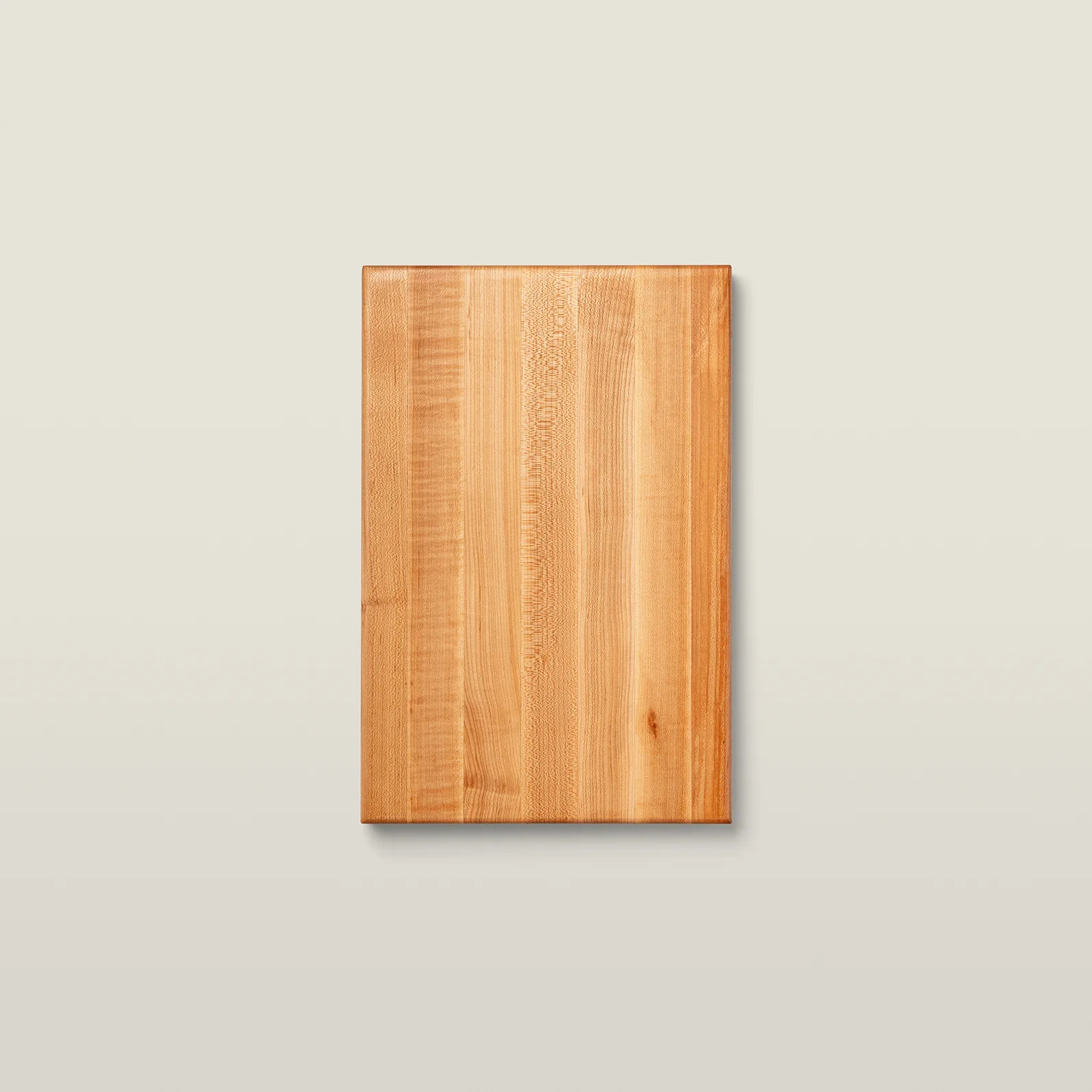
Made for professionals, but perfect for home cooks. (And it's going to last long enough for your great-grandkids to use it.)
The research that keeps confirming it
Since Cliver’s original research, multiple studies have backed up his findings. A 2025 study published in the Journal of Food Protection tested maple wood versus high-density polyethylene boards and found that wood had bactericidal properties that reduced microbiological loads compared to plastic.
Research comparing oak, beech, and plastic found that bacteria survived longest on plastic, followed by stainless steel. Oak showed the highest rate of bacterial die-off. A Brazilian study examining cutting boards in actual home kitchens found that plastic boards had significantly higher counts of aerobic bacteria and Enterobacteriaceae than wooden boards.
The one consistent exception to wood’s superiority: brand new plastic boards that haven’t been cut on yet. Smooth, undamaged plastic is relatively easy to clean. But the moment you start using it, knife scars create bacterial hiding spots that are nearly impossible to sanitize manually.
What about oiling your board?
Some research suggests that treating wooden boards with mineral oil or linseed oil may reduce their antibacterial effectiveness slightly by preventing bacteria from being absorbed as efficiently. However, the effect is minimal, and oiling is still recommended to prevent boards from cracking and warping. Even treated boards significantly outperform plastic in bacterial reduction.
The USDA’s quiet reversal
Here’s the kicker: when Cliver began his research, he contacted the USDA to ask for the scientific evidence behind their recommendation that plastic was safer than wood. Their response? They had no scientific evidence. They’d been making the recommendation based on assumptions, not data.
Current USDA regulations now permit the use of cutting boards made from maple or similar close-grained hardwoods in commercial settings. The FDA’s Food Code also allows hardwood cutting boards. Neither agency specifically requires plastic.
So which should you use?
The research is pretty clear: hardwood cutting boards (maple, walnut, cherry, oak) are at least as safe as plastic, and in many cases safer. They’re harder than plastic, so they develop fewer deep knife scars. They have natural antibacterial properties. And they don’t shed microplastics into your food, which plastic boards do every time you cut on them.
If you’re using plastic, replace it frequently, especially once it develops visible knife scars. Run it through the dishwasher after every use, particularly if you’ve cut raw meat on it. Don’t trust hand washing to adequately sanitize a knife-scarred plastic board.
If you’re using wood, wash it with hot water and dish soap after each use. Let it air dry completely. Don’t leave it soaking in water, and don’t put it in the dishwasher (the heat and moisture cycles will warp and crack the wood). Occasionally treat it with food-safe mineral oil to keep it from drying out and cracking.
The bottom line
The conventional wisdom about cutting boards was based on intuition, not science. Plastic seemed like it should be safer because it’s non-porous and modern. Wood seemed like it should be dangerous because it’s porous and old-fashioned.
But food safety isn’t about what seems right. It’s about what the data shows. And the data, collected over more than three decades of research, consistently shows that wooden cutting boards are remarkably effective at killing bacteria, while plastic boards become bacterial breeding grounds as soon as you start using them.
Your grandmother’s wooden cutting board was safer than anyone thought. The health department was wrong. And sometimes the old-fashioned way turns out to be the right way after all.